

About the
Project
Developed from the inside out.
Jungerbeer is one of the most creative architecture studios I have worked with.
CEO & Founder
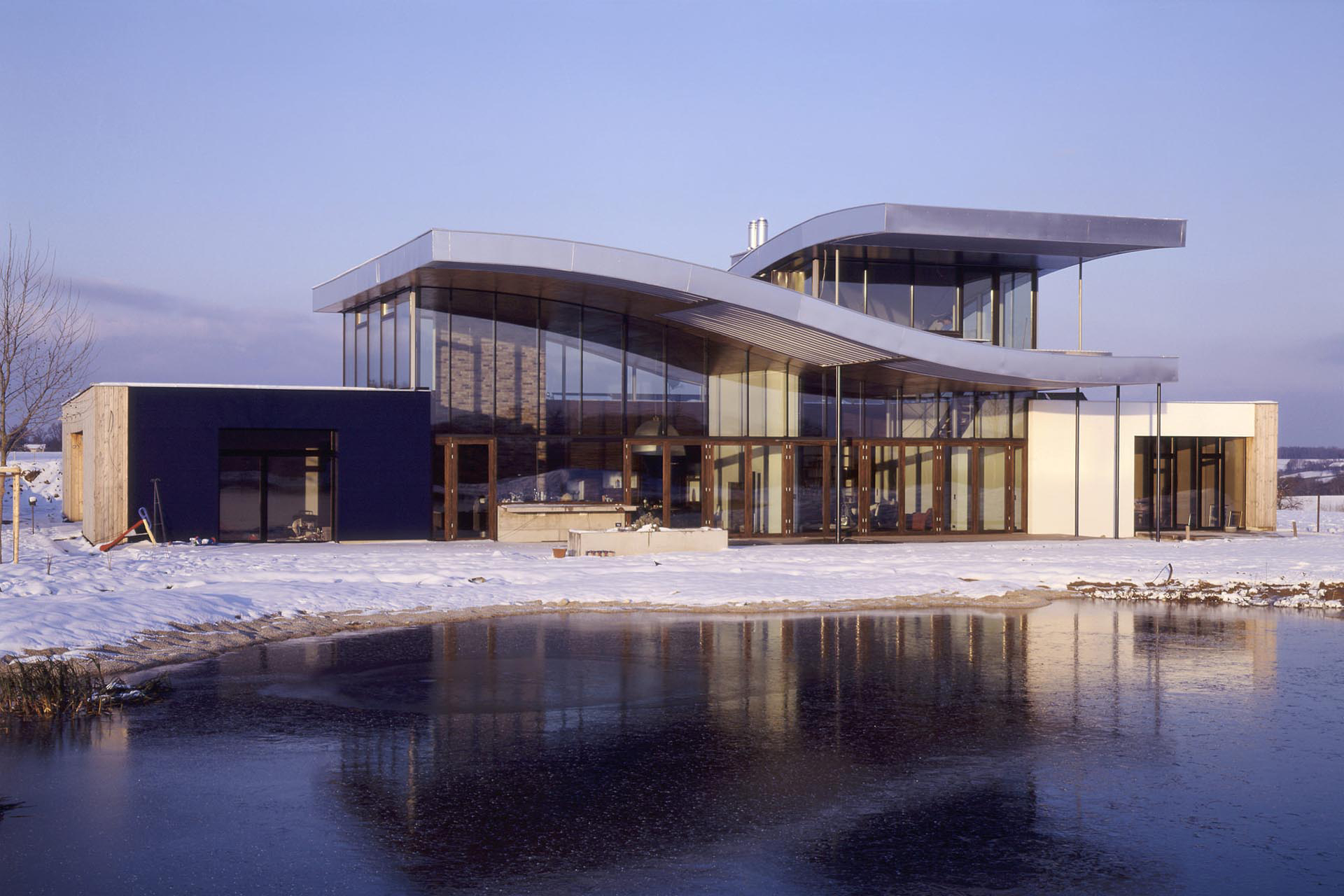
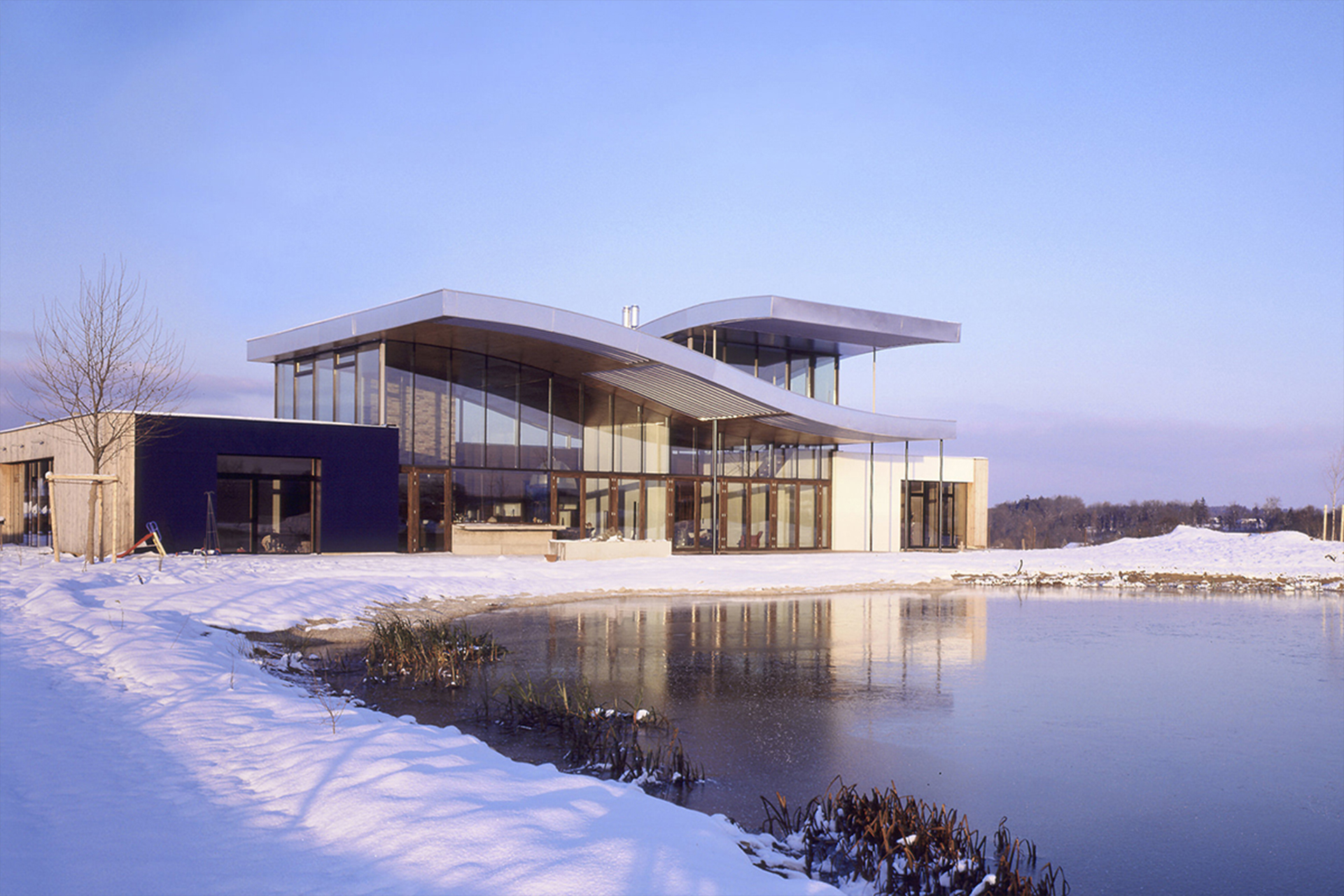
This large house can be experienced as a “Mediterranean city with a central square and narrow streets,” offering, through its multilayered structure, a complex and sophisticated spatial experience.
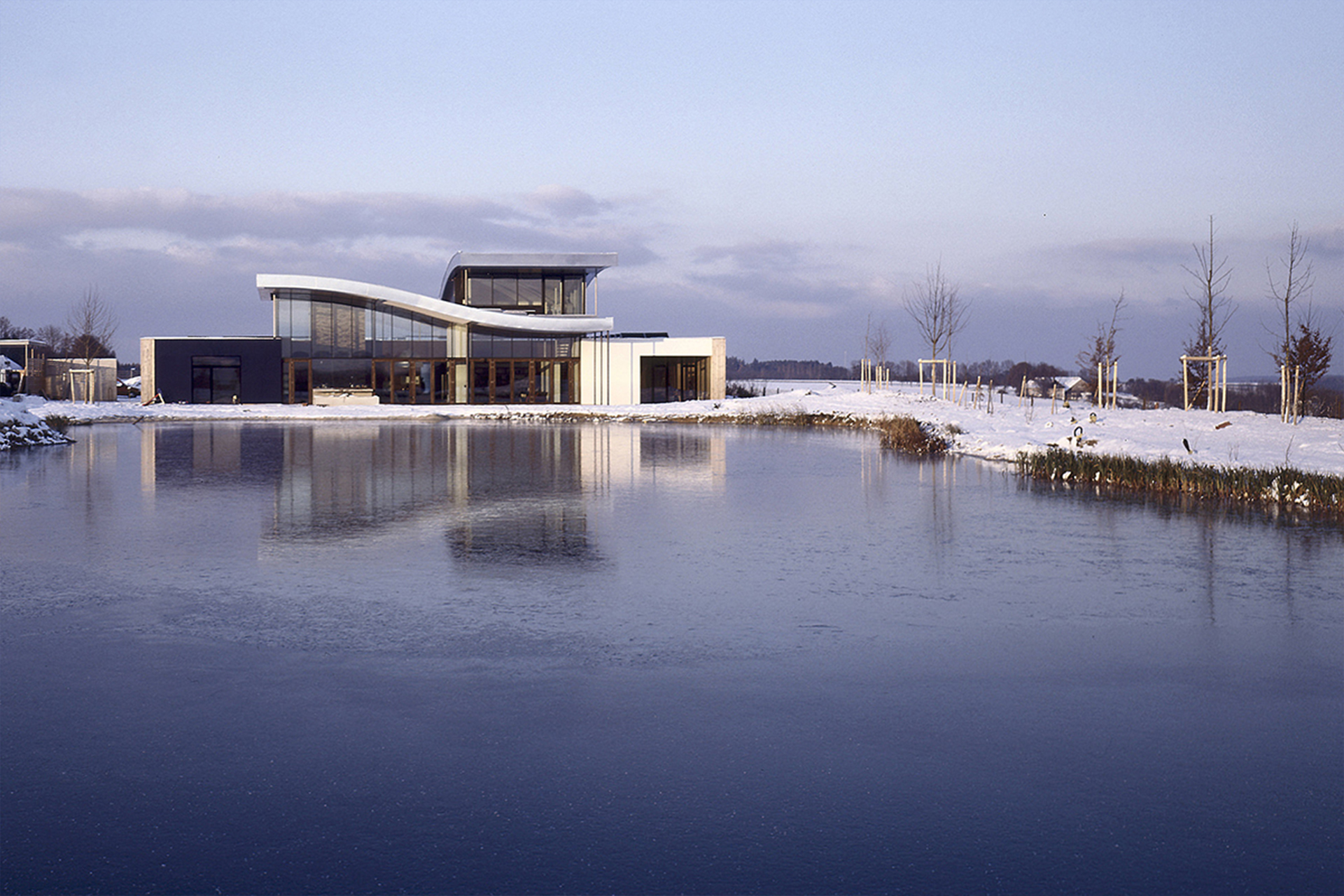
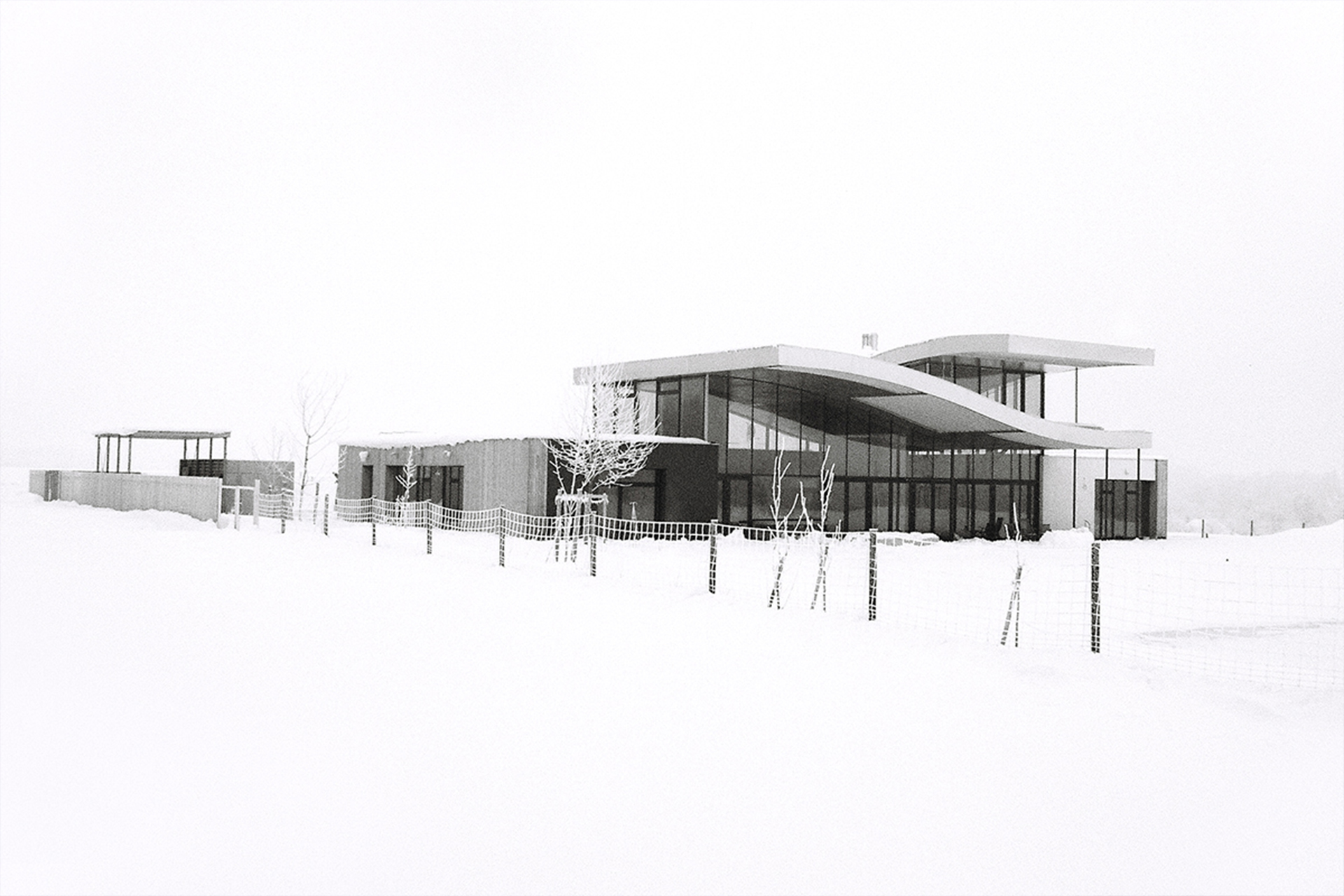
To the north, east, and west it sits quietly and introverted within the gently rolling landscape.
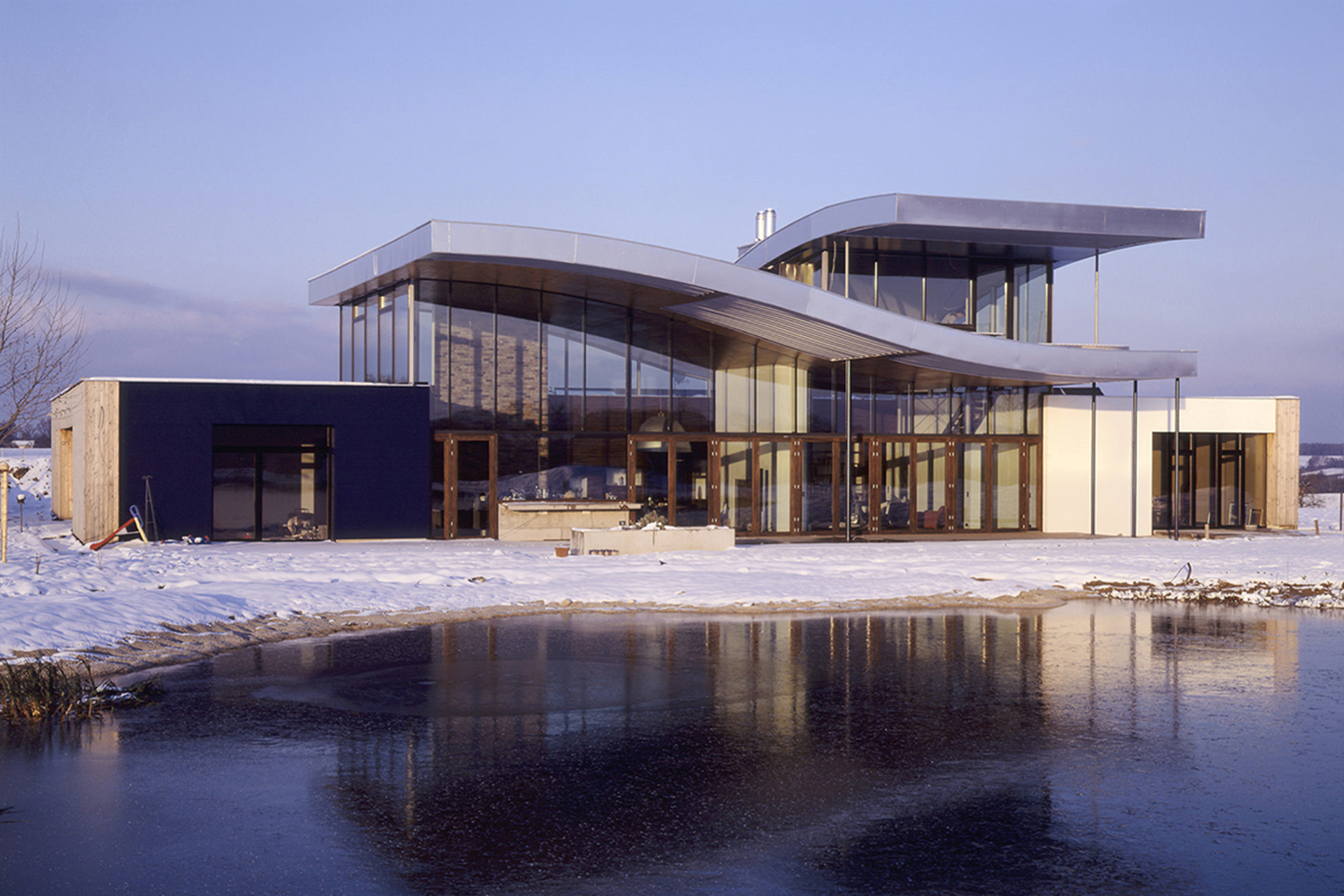
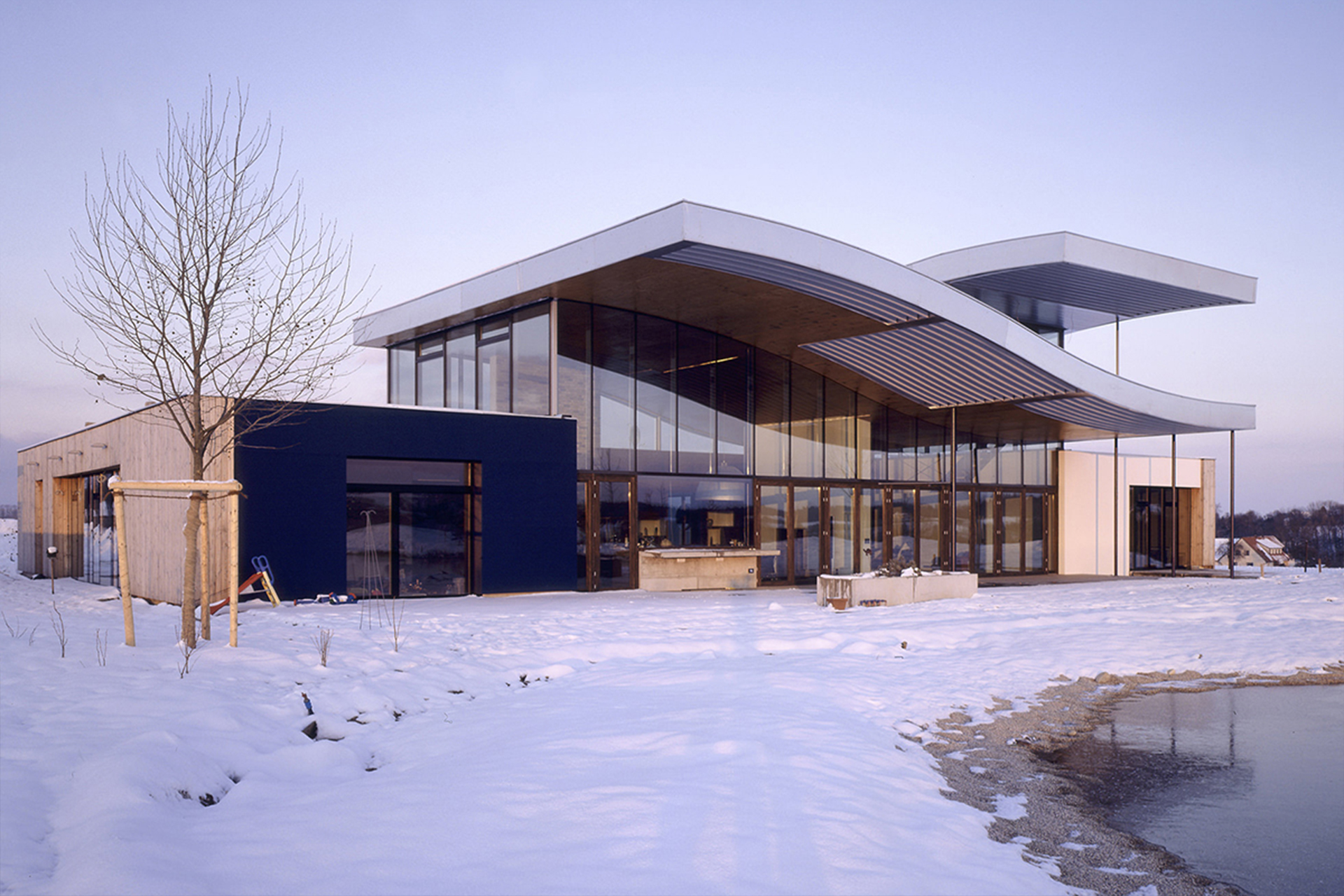
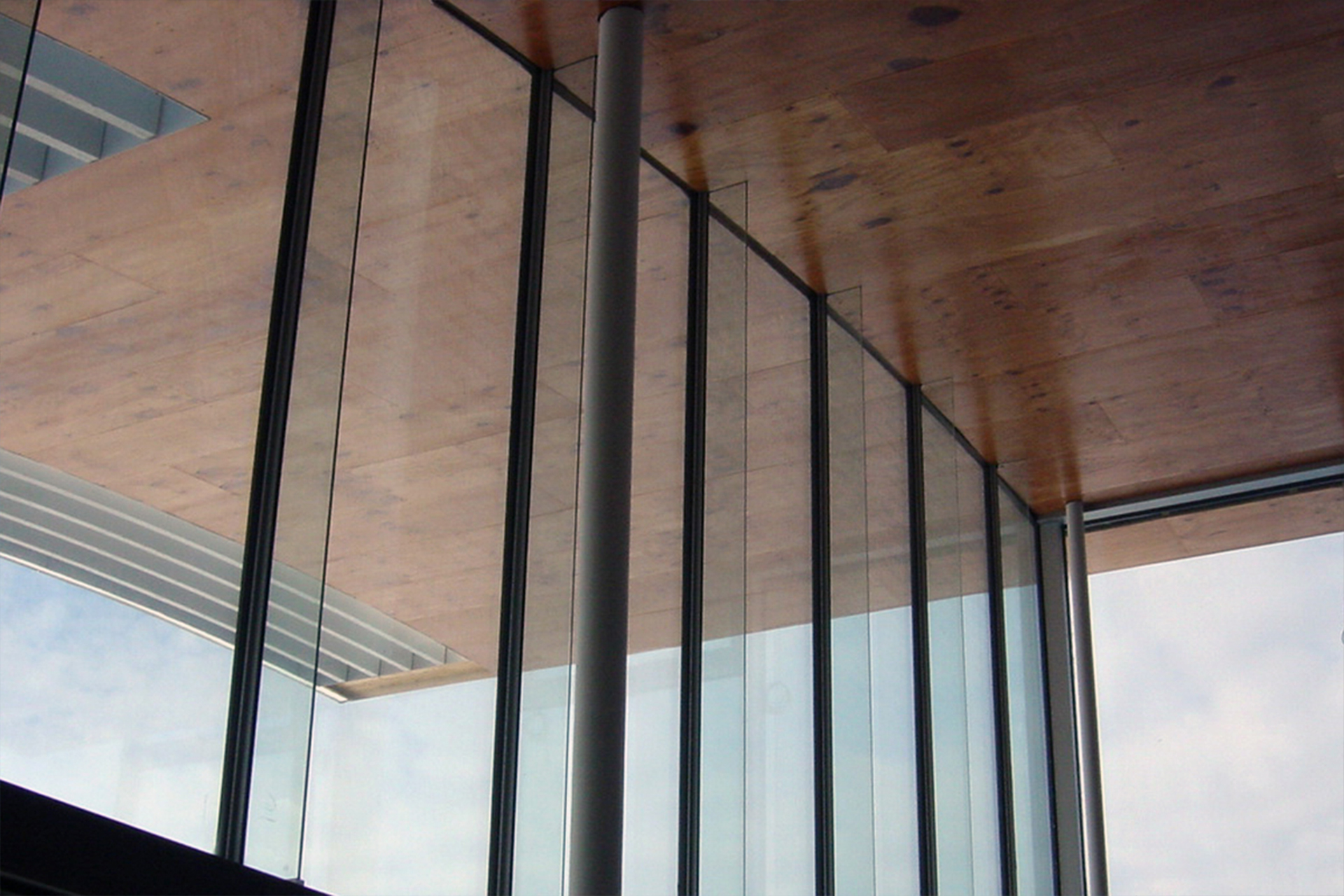
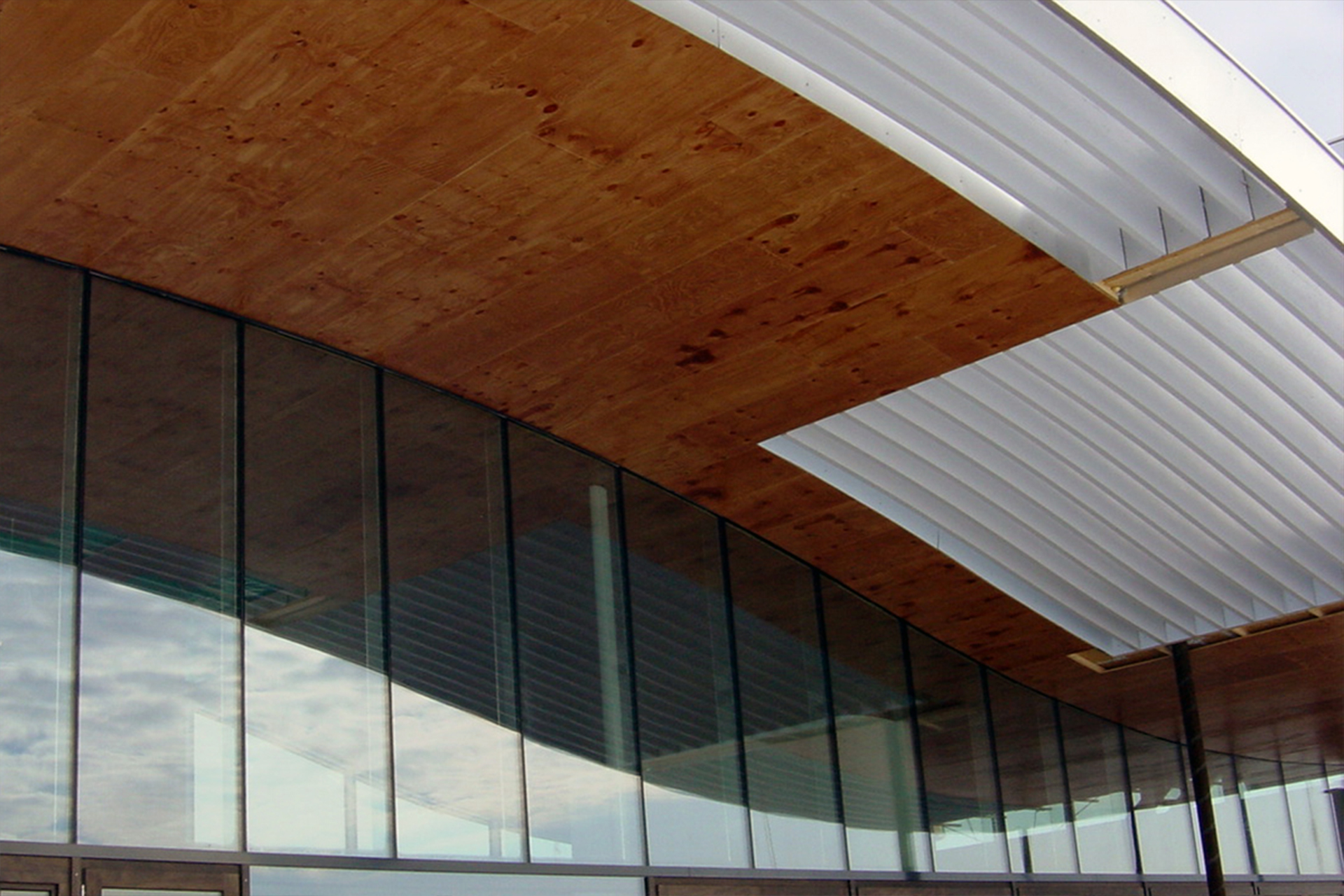
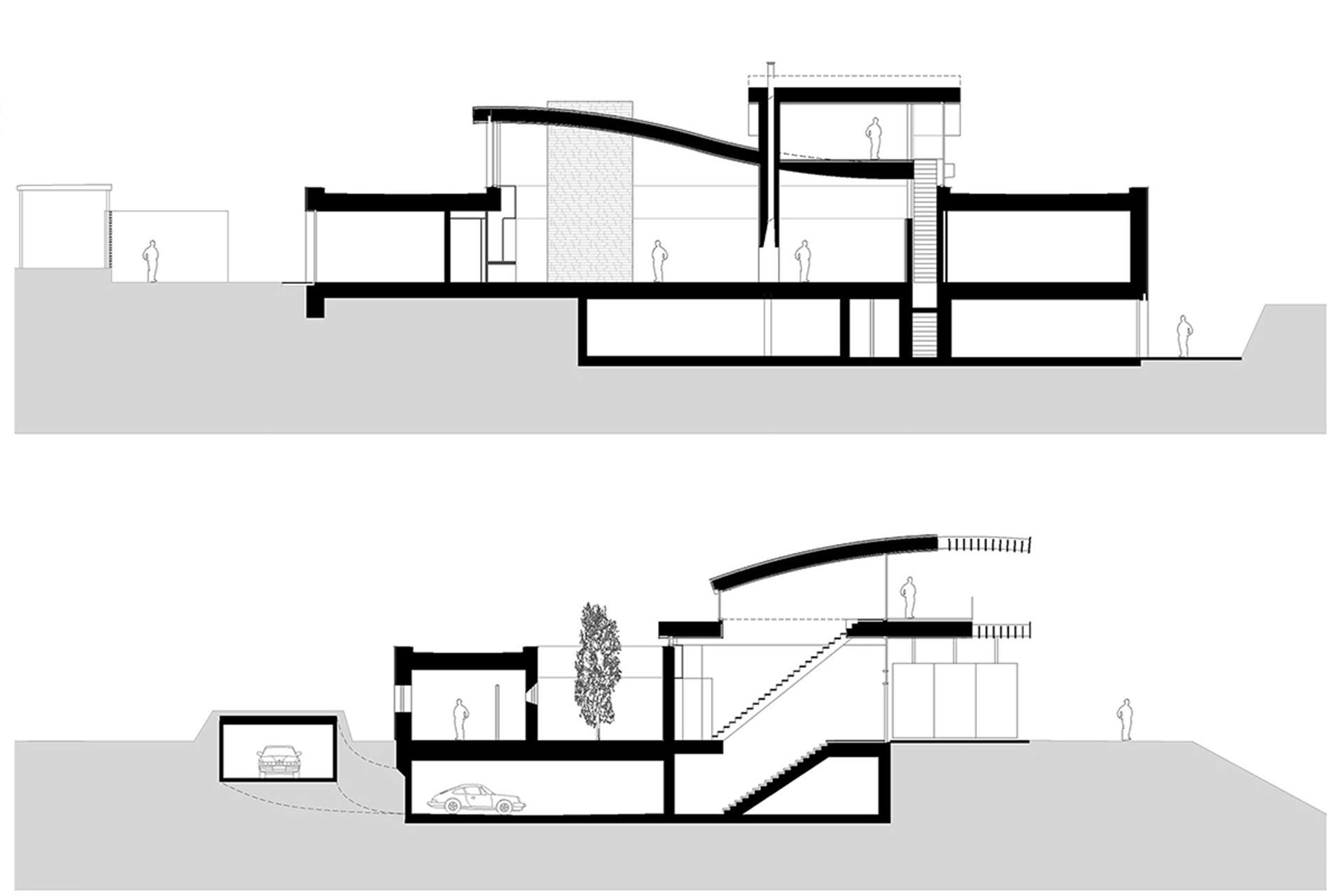
To the south, however, it opens beneath the far-projecting, wave-like roof planes toward the pond, allowing the interior living spaces to merge seamlessly with the outdoor living terrace.
To the north, east, and west it sits quietly and introverted within the gently rolling landscape.
To the south, however, it opens beneath the far-projecting, wave-like roof planes toward the pond, allowing the interior living spaces to merge seamlessly with the outdoor living terrace.
Info
“Architecture shaped by movement and restraint.”
-
Clientprivate
-
LocationSipbachzell, Austria
-
Project delivery phase2006 - 2007
-
Scope of WorkProject & Construction Management
-
Architectjungerbeer.at
The
Result
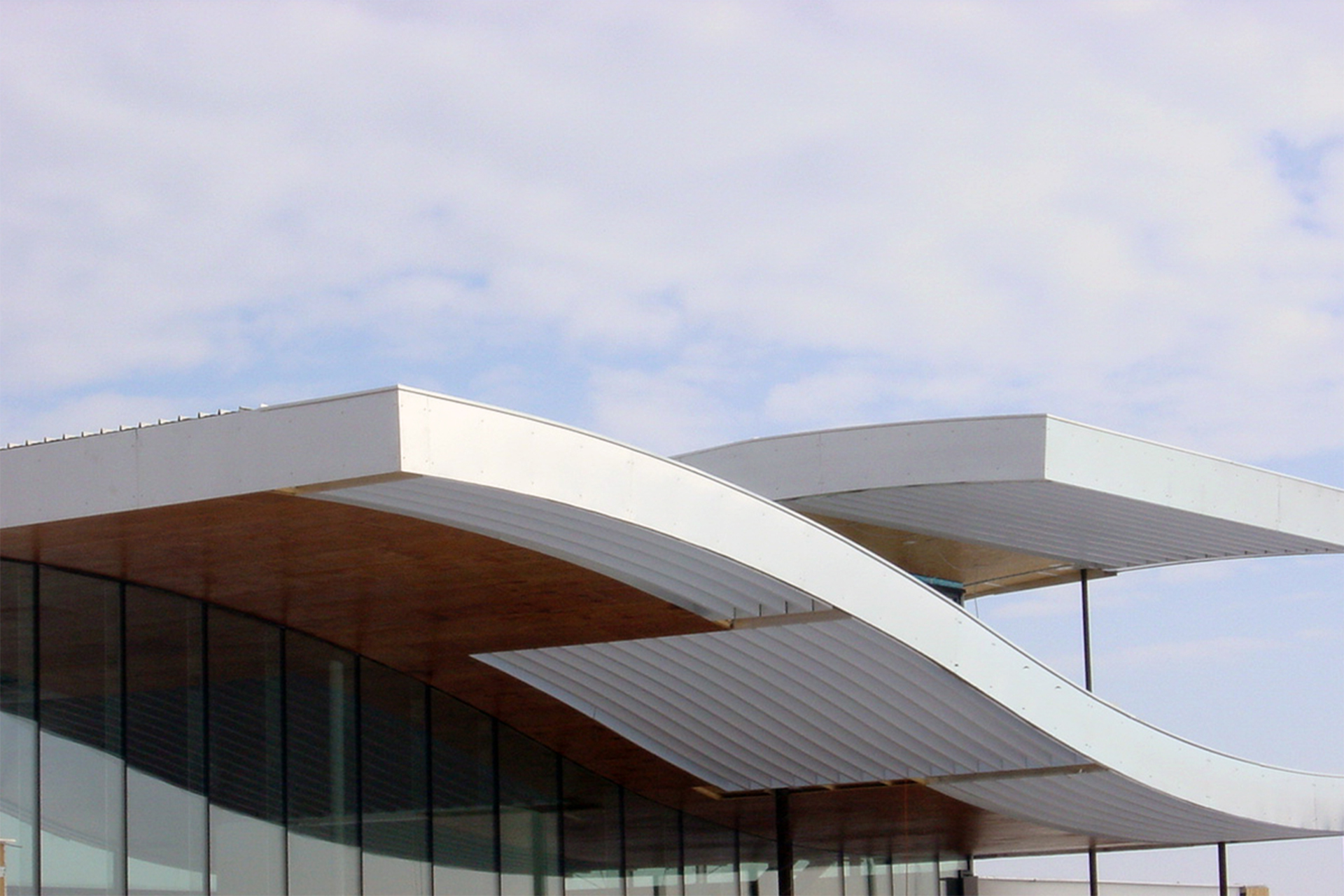
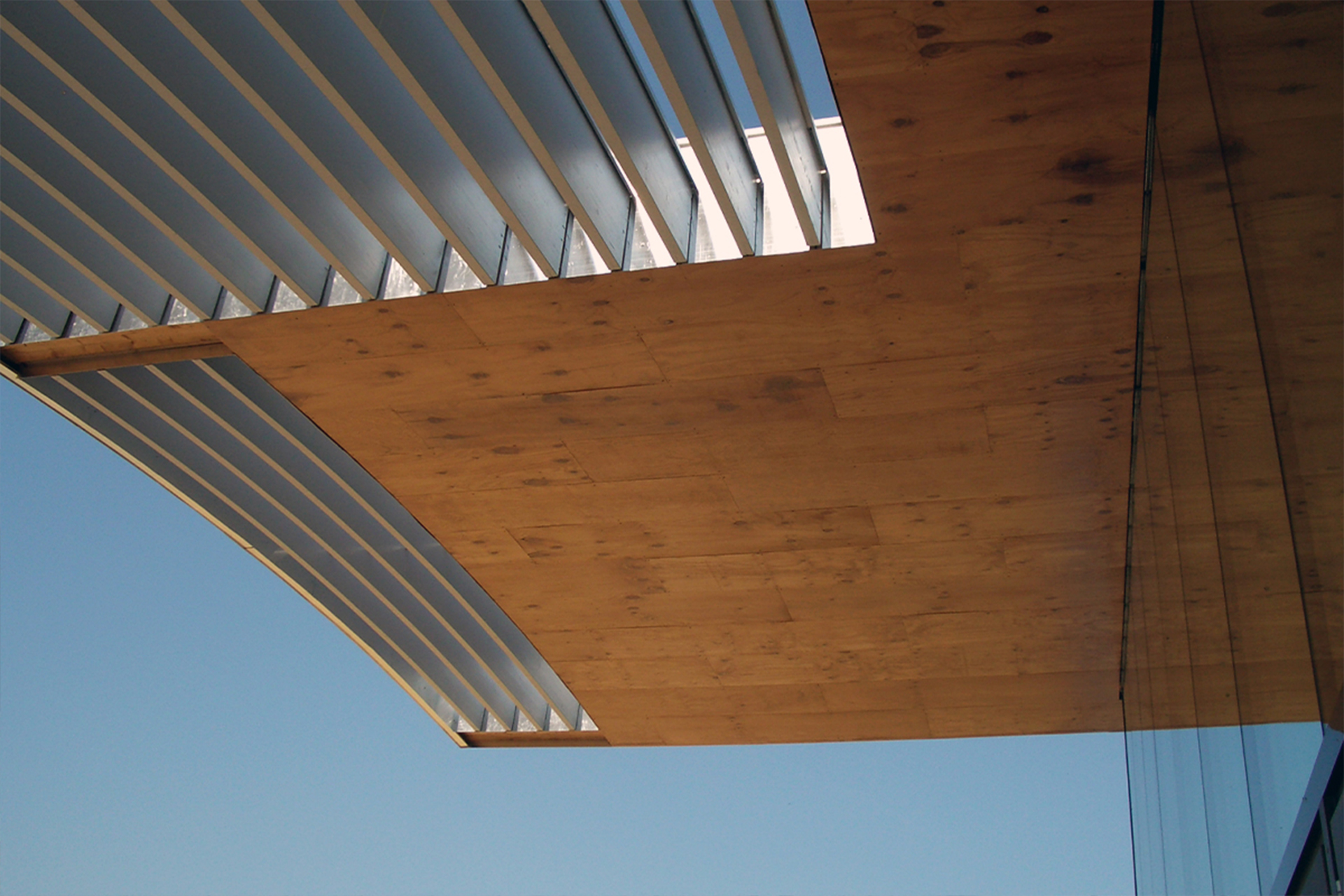
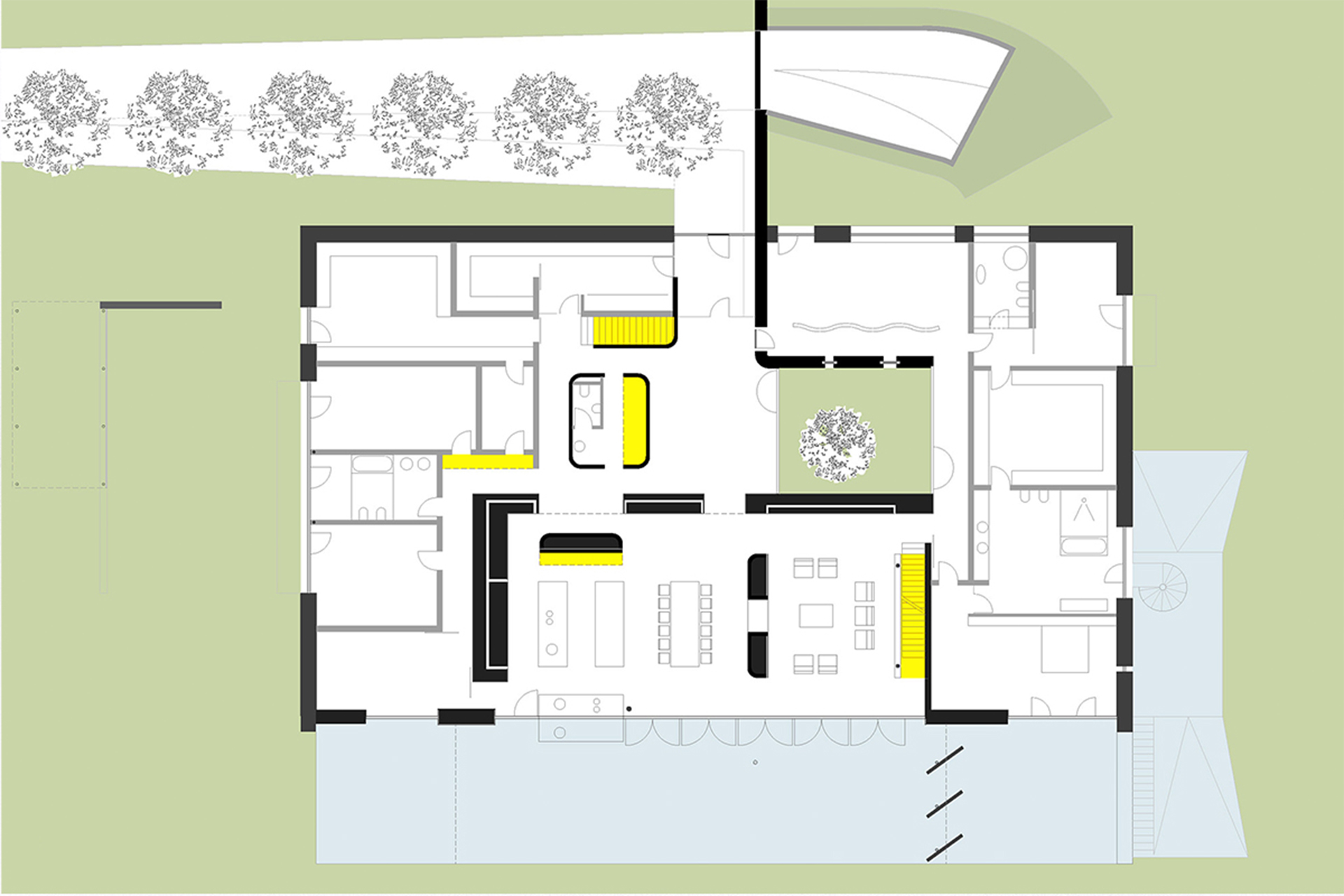
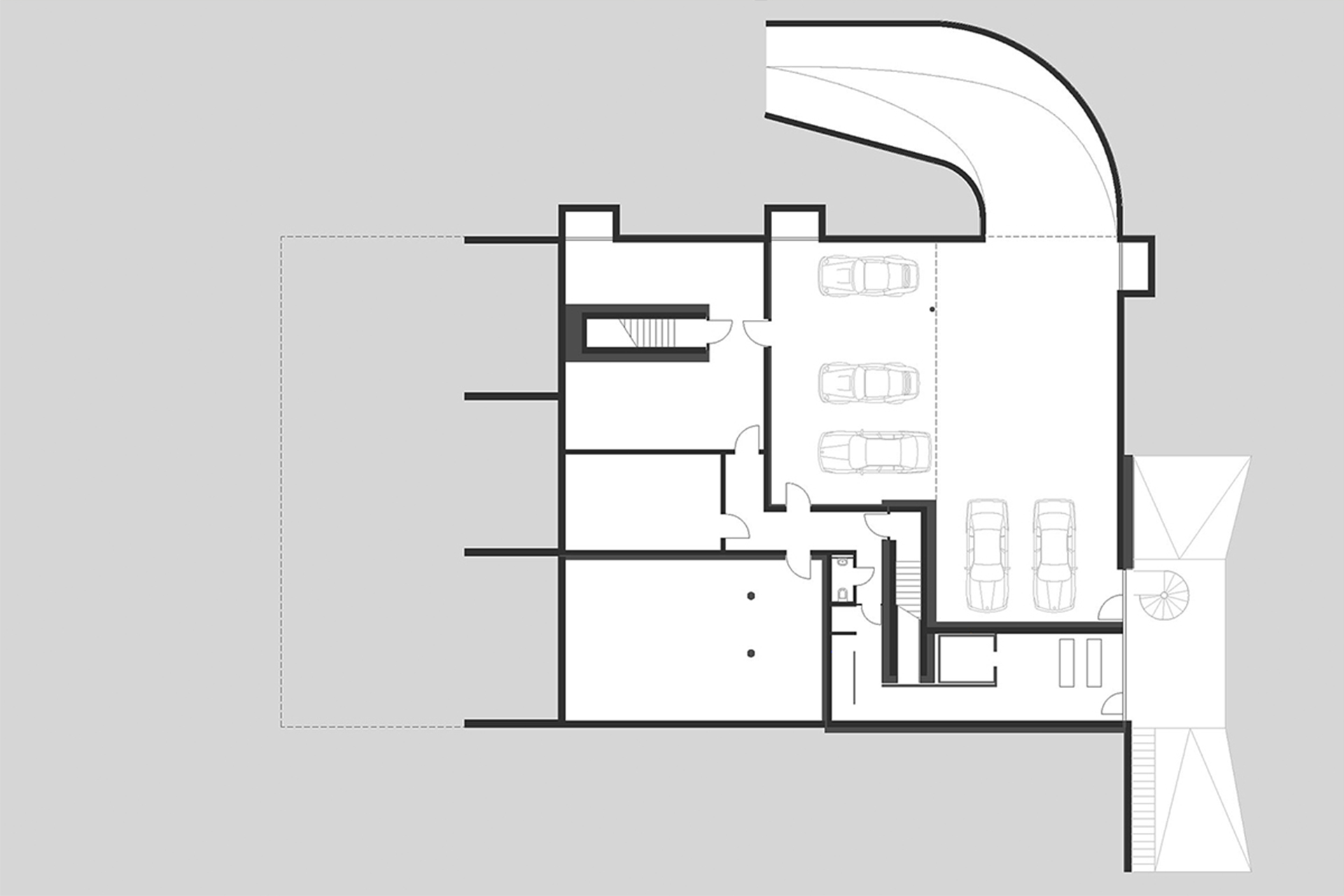
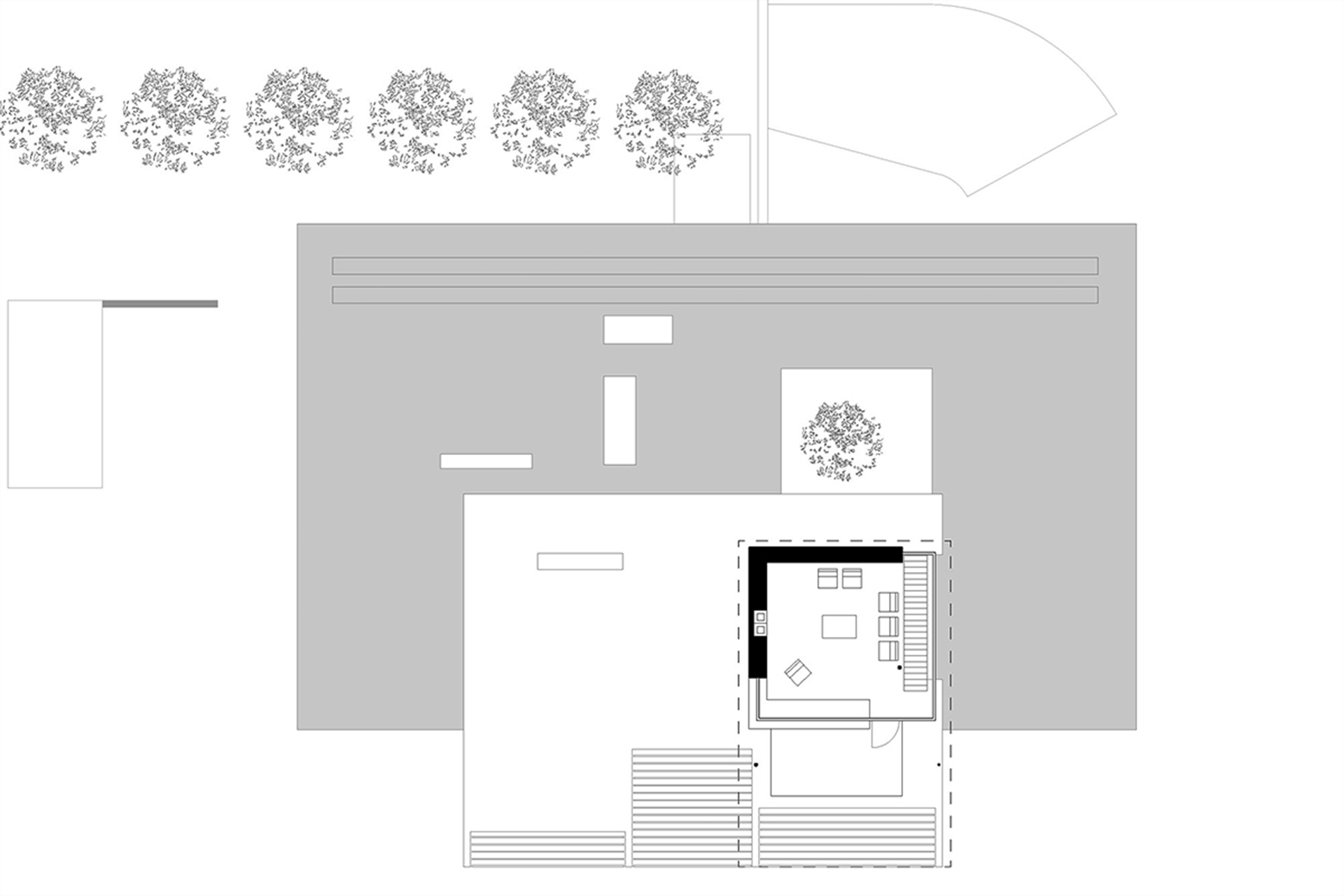
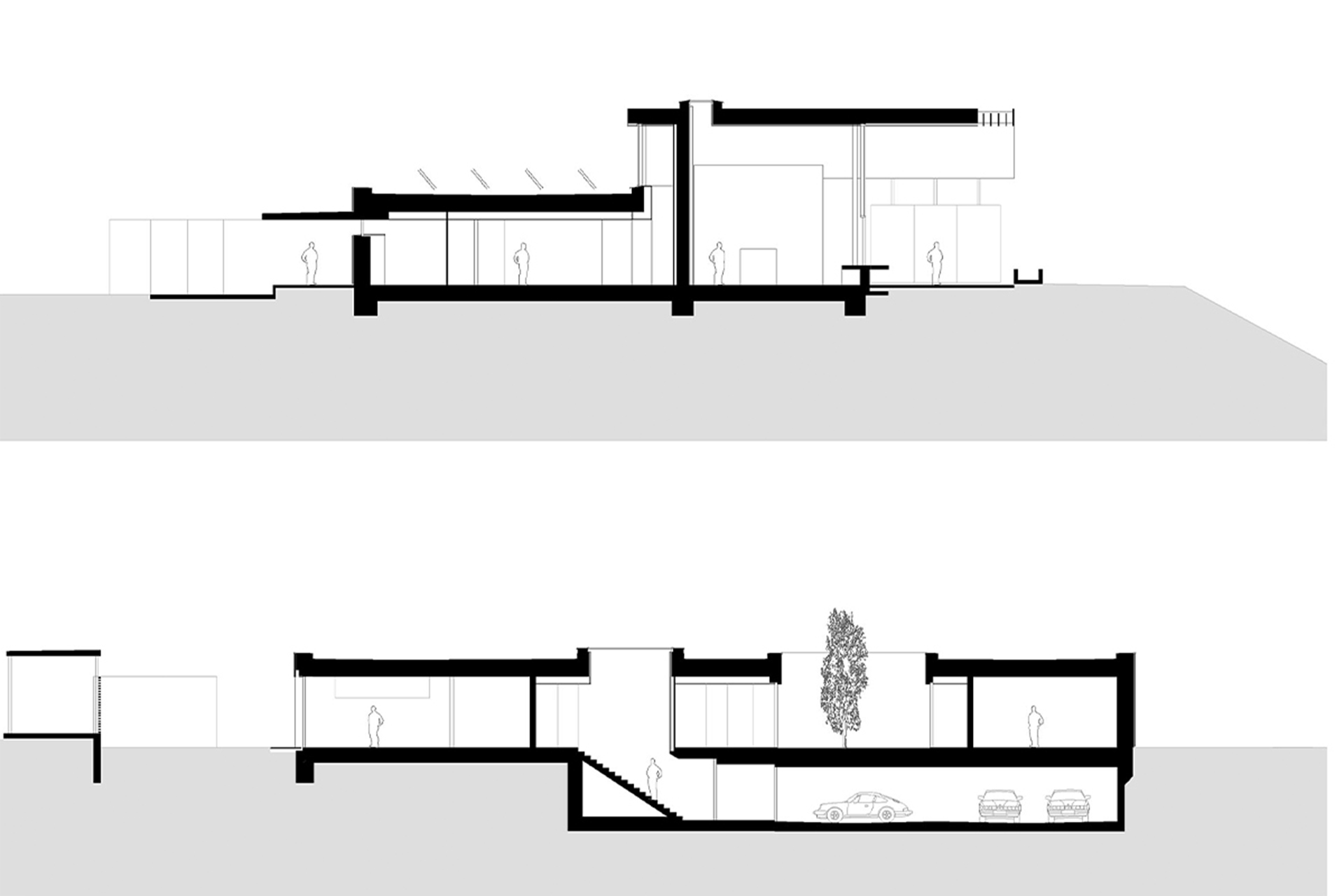
The goal was to create a technically high-performance passive house with the greatest possible openness and transparency. Two curved roofs undulate above the two-storey residential landscapes. Private areas, guest rooms, and service spaces are housed in surrounding “houses.” These are accessed via “alleys” flooded with daylight through skylights.
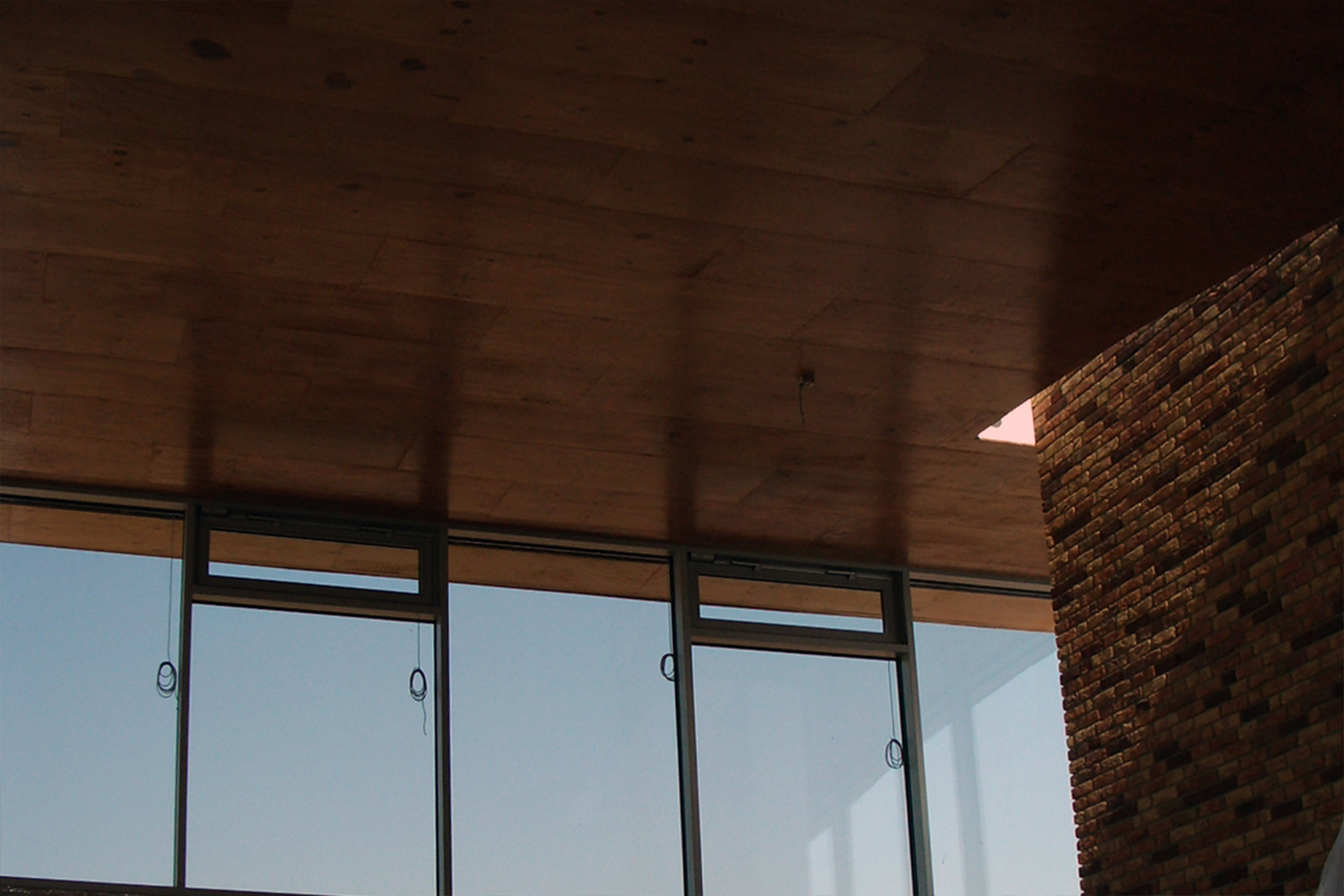
The open atrium brings a fragment of the outside world, along with generous daylight, into the heart of the house—the foyer. The reception area in the foyer, together with the adjoining atrium as an island of daylight, is conceived as a central “piazza.” Executed in calm colors and forms, it also assumes the intended additional function of an art exhibition space. The high vaulted ceiling, the space-embracing wooden framework, the freestanding exposed brick wall, and the full-height south-facing glazing define the living–dining area with warm, earthy materials and tones.
The “houses” (rooms for parents, child, guests, and service functions) form the northern, eastern, and western frame for the foyer and the south-facing living landscape. The “alleys” (corridors) leading from the “piazza” to these spaces are designed with indirect lighting effects, skylights, and subtly nuanced colored “house walls,” creating a varied and identity-forming spatial experience.
The open atrium brings a fragment of the outside world, along with generous daylight, into the heart of the house—the foyer. The reception area in the foyer, together with the adjoining atrium as an island of daylight, is conceived as a central “piazza.” Executed in calm colors and forms, it also assumes the intended additional function of an art exhibition space. The high vaulted ceiling, the space-embracing wooden framework, the freestanding exposed brick wall, and the full-height south-facing glazing define the living–dining area with warm, earthy materials and tones.
The “houses” (rooms for parents, child, guests, and service functions) form the northern, eastern, and western frame for the foyer and the south-facing living landscape. The “alleys” (corridors) leading from the “piazza” to these spaces are designed with indirect lighting effects, skylights, and subtly nuanced colored “house walls,” creating a varied and identity-forming spatial experience.
Vienna
Austria